American and Yugoslav Troops Clash at Trieste Border as Free Territory Officially Established, September 1947
1947Trieste, Italy
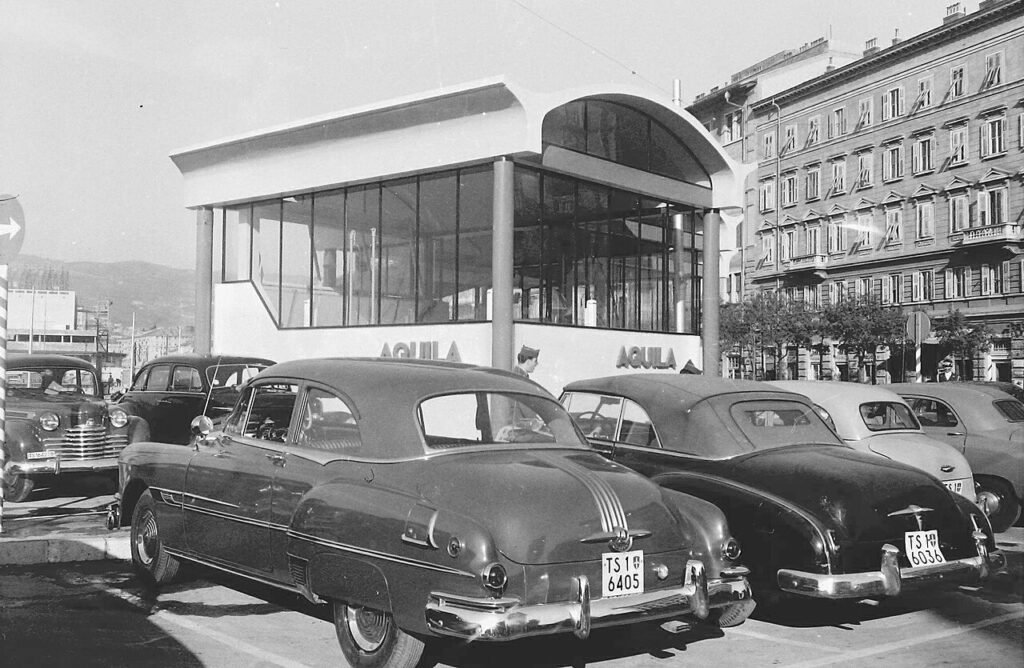
The sound of American machine gun fire echoed across a disputed border on September 17, 1947, as the creation of Europe’s newest political entity was baptized in conflict. Yugoslav troops attempting to cross into the Free Territory of Trieste met a wall of Allied resistance that would define the emerging Cold War’s first flashpoint.
Cold War Brinkmanship Template Born at Trieste
The Free Territory of Trieste emerged from the ashes of World War II as an international solution to competing territorial claims. Italy had controlled the strategic Adriatic port city, but Yugoslavia under Marshal Tito coveted the territory for its own. The 1947 peace treaties, which formally ended the war for five former enemy nations, carved out Trieste as an independent zone under Allied occupation—a compromise that satisfied no one completely.
The new territory represented more than just geographic reorganization. With tensions mounting between the Western Allies and the Soviet Union, Trieste became a symbolic battleground where competing ideologies would test their resolve. The city’s location at the intersection of Italian, Slavic, and Germanic cultures made it a perfect microcosm of Europe’s post-war divisions.
“The Yugoslavs sought to cross the frontier at a U S outpost
— The Daily Alaska Empire, September 17, 1947
First Western Eastern Military Confrontation
As the peace treaty officially took effect at 2 a.m. local time (7 p.m. Eastern Standard Time on September 16), Yugoslav forces moved to join British and American troops in the Allied occupation of Trieste. However, they chose to cross at an unauthorized location rather than the prearranged southern entry point. When Yugoslav troops approached the American outpost, they encountered immediate resistance.
FROM THE ARCHIVE
Like reading history this way?
Get one of these stories delivered every day. Free.
SUBSCRIBE →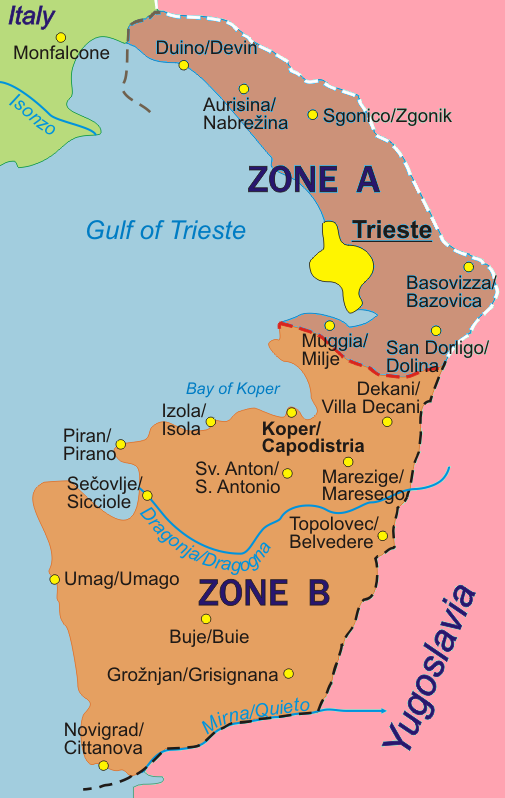
“The Yugoslavs sought to cross the frontier at a U S outpost instead of at the prearranged area in the south,” reported The Daily Alaska Empire. American forces responded decisively, firing a warning burst from their machine gun. The show of force proved effective—the Yugoslav troops withdrew without escalating the confrontation into a full-scale battle.
The incident occurred against a backdrop of broader instability. In Italy proper, spreading strikes threatened an already fragile economy, while Roman newspapers denounced the peace treaty as “infamous.” The birth of the Free Territory was clearly not going to be a peaceful one.
Yugoslav Forces Withdraw After Machine Gun Warning
This bloodless border clash represented far more than a simple misunderstanding about crossing points. It marked one of the first direct military confrontations between Western and Eastern bloc forces in the post-war period. The American willingness to use force, even in warning, demonstrated that the United States would not allow Soviet-aligned Yugoslavia to unilaterally dictate terms in occupied territories.
The incident also highlighted the practical difficulties of managing occupied territories in an increasingly polarized world. What should have been a routine military coordination became a test of wills that foreshadowed larger conflicts to come. The Free Territory itself would remain a source of tension until 1954, when it was finally divided between Italy and Yugoslavia.
For Yugoslavia, the rebuff at the border represented an early lesson in the limits of Tito’s influence. Despite breaking with Stalin later, Yugoslavia learned that neither East nor West would automatically defer to its territorial ambitions.
Tito’s Territorial Ambitions Meet Allied Reality
The Trieste confrontation established the template for Cold War crisis management that would persist for decades. The pattern of brinkmanship followed by de-escalation, seen here in the warning shots and Yugoslav withdrawal, became the standard playbook for superpower confrontations from Berlin to Cuba. Today’s tensions between NATO and Russia over Eastern European borders echo the same dynamics that played out at Trieste’s contested frontier in 1947.
Sources
- The Daily Alaska Empire, September 17, 1947 — Library of Congress