

Japanese Navy Loses 100 Aircraft in Guadalcanal Air Battle, November 1942
1942Solomon Islands, Pacific Ocean
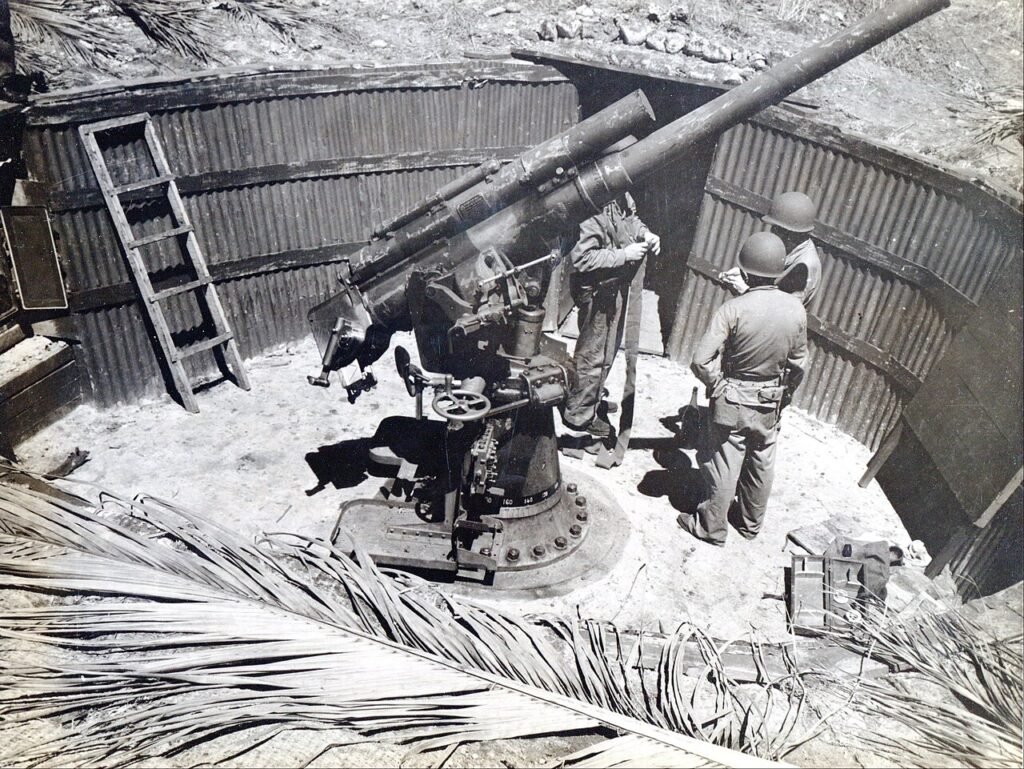
Three hundred sixty miles northeast of Guadalcanal, the Pacific sky erupted in one of the war’s most devastating aerial engagements. On November 3, 1942, American newspapers reported a crushing blow to Japanese naval aviation that would reshape the balance of power in the Solomon Islands campaign.
Modern Supercarriers Trace Roots to Guadalcanal
The battle for Guadalcanal had raged since August 1942, when American Marines landed on the strategic island to capture its nearly completed airfield. The Japanese, recognizing the threat to their Pacific empire, had committed massive naval and air resources to retake the island. By early November, three separate Japanese naval concentrations were prowling the waters around the Solomons—one 300 miles northwest of Guadalcanal near New Britain, another near Florida Island, and a third 400 miles to the northeast.
These formations represented Japan’s most ambitious attempt yet to break American control of Henderson Field and drive Allied forces from the island. The stage was set for what military analysts had long anticipated: a major naval confrontation that would determine Guadalcanal’s fate.
“100 Japanese airplanes have been destroyed with 60 more seriously damaged
— Detroit Evening Times, November 3, 1942
The Battle
The air-sea engagement that unfolded exceeded even the most dire predictions for Japanese losses. According to Navy communiques reported in the Detroit Evening Times, “100 Japanese airplanes have been destroyed with 60 more seriously damaged.” The scale of destruction extended beyond aircraft to the heart of Japanese naval power—two aircraft carriers, three cruisers, and two battleships suffered damage in the coordinated American assault.
FROM THE ARCHIVE
Like reading history this way?
Get one of these stories delivered every day. Free.
SUBSCRIBE →The battle’s location, somewhere between the Japanese concentrations near Florida Island and the force 400 miles northeast of Guadalcanal, suggests a massive interception of enemy reinforcements headed for the embattled island. American forces, likely operating from Henderson Field and nearby naval units, caught the Japanese formations in a devastating trap that stripped them of both offensive capability and air cover.
Strategic Impact
This engagement represented more than tactical success—it marked a fundamental shift in Pacific naval aviation. The loss of 160 Japanese aircraft in a single day, combined with damage to major fleet units, crippled Japan’s ability to maintain sustained operations around Guadalcanal. These were not just machines but irreplaceable veteran pilots whose training had taken years to complete.
The timing proved particularly critical. Japanese forces on Guadalcanal were already struggling with supply shortages and constant Allied pressure. This naval defeat effectively ended any hope of major reinforcement or evacuation operations, sealing the fate of thousands of Japanese troops still fighting on the island.
Henderson Field Strips Enemy Air Power
The November battle illuminated the broader transformation occurring in Pacific warfare. Japanese naval aviation, once the terror of Pearl Harbor and the Philippines, was being systematically destroyed by improved American tactics, better aircraft, and superior production capacity. The ability to inflict such devastating losses while protecting American carriers demonstrated that the initiative had definitively shifted to Allied forces.
For the Guadalcanal campaign specifically, this engagement removed the last serious threat to Henderson Field’s operations. Without adequate air cover, Japanese naval forces could no longer operate effectively in the Solomons during daylight hours, relegating them to desperate nighttime supply runs that would prove increasingly futile.
Three Japanese Naval Forces Converge on Solomons
This battle established the template for American naval aviation supremacy that continues to define U.S. military strategy today. The carrier-based air power that devastated Japanese forces in 1942 evolved directly into the modern supercarrier fleet that projects American influence worldwide. Henderson Field, secured by victories like this one, still operates today as a civilian airport serving the Solomon Islands capital of Honiara.
Sources
- Detroit Evening Times, November 3, 1942 — Library of Congress
- The Ypsilanti Daily Press, November 3, 1942 — Library of Congress
- The Daily Monitor Leader, November 3, 1942 — Library of Congress