Colonel Mitchell Accuses Navy Officials at Air Disaster Hearing, September 1925
1925Washington, District of Columbia
The tension in the congressional hearing room was palpable as Colonel William “Billy” Mitchell rose to deliver what would become one of the most explosive pieces of military testimony in American history. On September 30, 1925, before a packed audience and a board of investigators, the Army’s most vocal advocate for air power launched a direct assault on Navy officials, blaming them for a series of recent aviation disasters that had shocked the nation.
The Camel’s Back Breaks
Mitchell’s testimony was unflinching in its criticism of naval aviation leadership. Speaking with the passion of a man who believed lives were being needlessly lost, he declared that recent air disasters were the inevitable result of incompetent officials in positions they were unqualified to hold. “All these things have broken the camels back We are in deplorable condition,” Mitchell told the congressional board, his words cutting through the formal atmosphere of the hearing room.
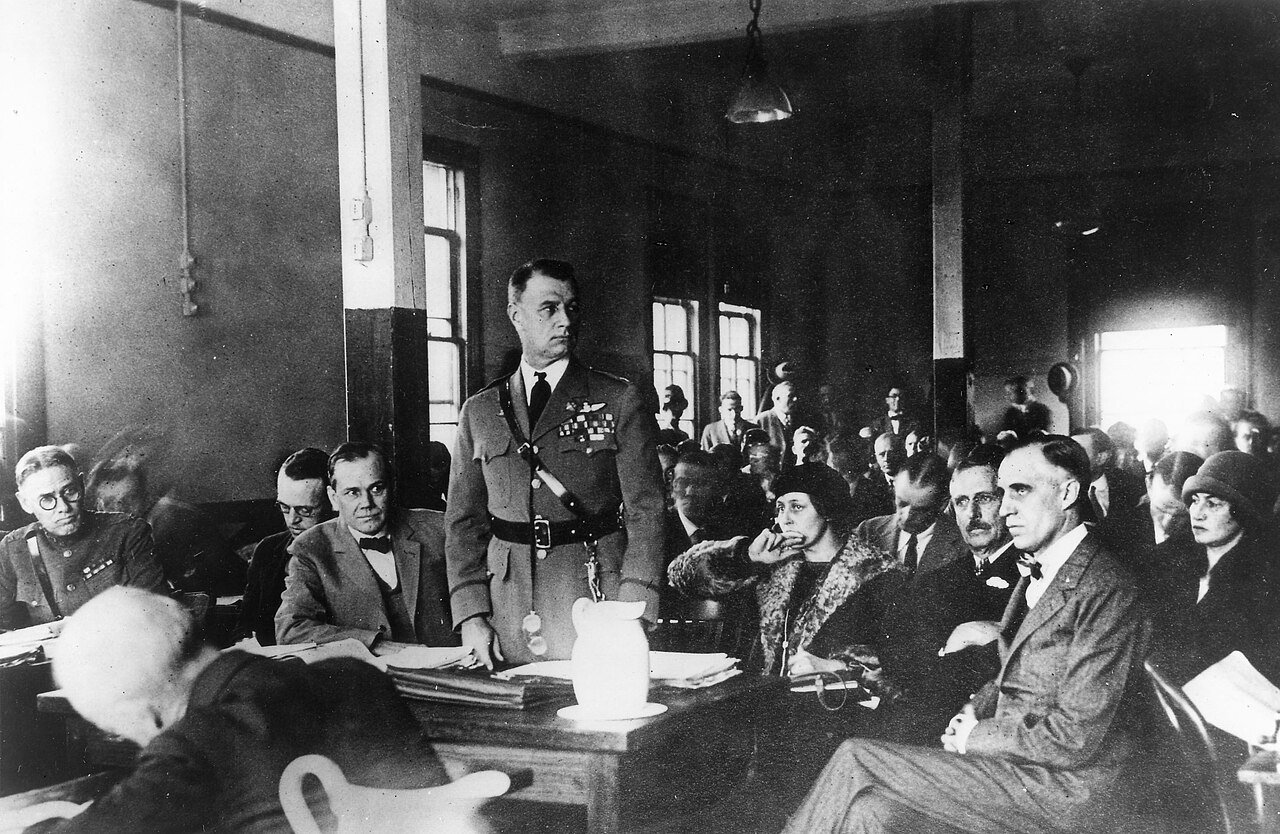
The colonel’s appearance before the board was part of an investigation into military aviation policy, sparked by a series of high-profile crashes that had raised serious questions about the safety and leadership of American military aviation. Mitchell, already a controversial figure for his outspoken views on air power, used the platform to deliver his most pointed critique yet of what he saw as a fundamentally broken system.
“All these things have broken the camels back We are in deplorable condition
— The Washington Times, September 30, 1925
FROM THE ARCHIVE
Like reading history this way?
Get one of these stories delivered every day. Free.
SUBSCRIBE →Sparks Fly in the Hearing Room
The hearing quickly became heated as Mitchell noticed a general staff officer taking notes behind the board. Never one to shy away from confrontation, he interrupted his own testimony to address what he saw as intimidation tactics. “Theres a staff officer taking down everything that is said here in order to run with it to the War Department,” Mitchell declared, his frustration evident.
When board member Dwight W. Morrow, the chairman, pointed out that this was a public hearing, Mitchell’s response revealed his deeper concerns about military culture. He argued that the presence of staff officers was having a chilling effect on other pilots who might want to testify truthfully about problems in military aviation. “It retards a free discussion of their views It is coercion They hesitate to tell the truth when they must disagree with their superiors,” he explained.
A Man on a Mission
Mitchell’s testimony was part of his broader campaign to revolutionize American military aviation. The decorated World War I veteran had spent years arguing that air power would dominate future warfare, but his criticism of traditional military leadership had made him powerful enemies. His appearance before the congressional board represented both the peak of his influence and the beginning of his downfall.
The colonel’s willingness to directly challenge Navy officials and military hierarchy in such a public forum was unprecedented. His testimony revealed not just disagreements over policy, but fundamental conflicts over how the military should adapt to new technologies and changing warfare. For Mitchell, the recent aviation disasters were proof that the old guard was dangerously out of touch with the realities of modern military aviation.
Today’s Air Force Echoes
Mitchell’s 1925 testimony anticipated many of the organizational changes that would eventually create the independent U.S. Air Force in 1947. His arguments about the need for specialized aviation leadership and the dangers of inter-service rivalry continue to influence military aviation policy today, as the Pentagon grapples with emerging technologies like drones and space warfare.
Sources
- The Washington Times, September 30, 1925 — Library of Congress