

Russian Military Officers Cross Bulgarian Frontier Amid Growing Eastern Crisis, 1883
1883Bulgaria
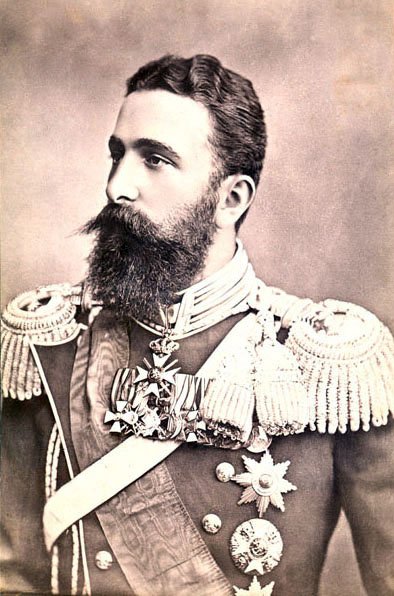
The delicate balance of power in southeastern Europe teetered on the edge of crisis in September 1883 as Russian military officers began crossing into Bulgaria under mysterious circumstances. What appeared to be a covert operation threatened to reignite the Eastern Question—that combustible mix of great power rivalry, ethnic nationalism, and Ottoman decline that had plagued European diplomacy for decades.
Moscow’s Blueprint for Modern Interventions
Bulgaria had emerged as an autonomous principality in 1878 following the Russo-Turkish War, but its relationship with its liberator Russia had grown increasingly strained. Prince Alexander of Battenberg, installed with Russian backing, had begun asserting Bulgarian independence from St. Petersburg’s control. The Congress of Berlin had established a precarious settlement in the Balkans, but Russian ambitions in the region remained a constant source of tension with Austria-Hungary and other European powers.
The broader context was equally volatile. The Ottoman Empire continued its long decline, creating power vacuums that the great powers were eager to fill. Germany’s growing influence through its alliance system, particularly with Austria-Hungary, posed a direct challenge to Russian interests in the Balkans. Romania’s recent moves to align itself with Germany and Austria only heightened Russian concerns about being isolated in the region.
“A large number of Russians evidently military officers are crossing the frontier
— New-York Tribune, September 11, 1883
Berlin Settlement Unravels in Balkans
On September 10, 1883, disturbing reports reached Western capitals about Russian activities along the Bulgarian frontier. According to dispatches from Cracow, “a large number of Russians evidently military officers are crossing the frontier on the way to Bulgaria.” These weren’t ordinary border crossings—intelligence suggested a coordinated effort by the Czar’s agents operating within Bulgaria itself.
FROM THE ARCHIVE
Like reading history this way?
Get one of these stories delivered every day. Free.
SUBSCRIBE →London’s Post provided even more alarming details from its Berlin correspondent, reporting that Russian agents in Bulgaria “are acting in a thoroughly revolutionary manner and do not even disdain a coalition with the Nihilists.” The implication was clear: Russia was actively working to destabilize Prince Alexander’s government, potentially through alliance with radical revolutionary groups.
The suspected Russian objective was nothing less than regime change. Reports indicated that Moscow sought to remove Prince Alexander from the Bulgarian throne and replace him with a Russian puppet ruler. Such a move would effectively return Bulgaria to direct Russian control, undoing the delicate constitutional arrangement that had emerged from the Treaty of Berlin.
Russian Officers Infiltrate Bulgarian Frontier
The Bulgarian crisis of 1883 represented more than a localized dispute—it threatened to unravel the entire post-1878 settlement in southeastern Europe. European diplomats feared that Russian intervention in Bulgaria would trigger a broader confrontation, potentially drawing in Austria-Hungary, which had vital interests in maintaining the Balkan status quo.
The incident illuminated the fundamental instability of the Berlin settlement. While the Congress of Berlin had temporarily resolved the immediate crisis following Russian victory over the Ottomans, it had not addressed the underlying tensions between Russian expansionism and Austrian determination to prevent Russian dominance in the Balkans.
Romania’s simultaneous efforts to align with Germany and Austria-Hungary took on new urgency in this context. Bucharest recognized that Russian success in Bulgaria would leave Romania dangerously isolated and potentially next in line for Russian pressure. The crisis thus accelerated the formation of opposing alliance systems that would characterize European diplomacy for the next three decades.
Prince Alexander Defies St Petersburg
The 1883 Bulgarian crisis established a pattern of Russian intervention in the Balkans that continues to shape regional politics today. Modern conflicts in Ukraine, Georgia, and other former Soviet territories echo the same dynamic of Russian attempts to control neighboring states through political manipulation and military pressure. The crisis also demonstrated how great power competition in the Balkans could escalate beyond regional boundaries—a lesson tragically validated in 1914 when an assassination in Sarajevo triggered World War I.
Sources
- New-York Tribune, September 11, 1883 — Library of Congress