

Roosevelt Declares Unlimited National Emergency in Momentous Radio Address, June 1941
1941Washington, D.C.
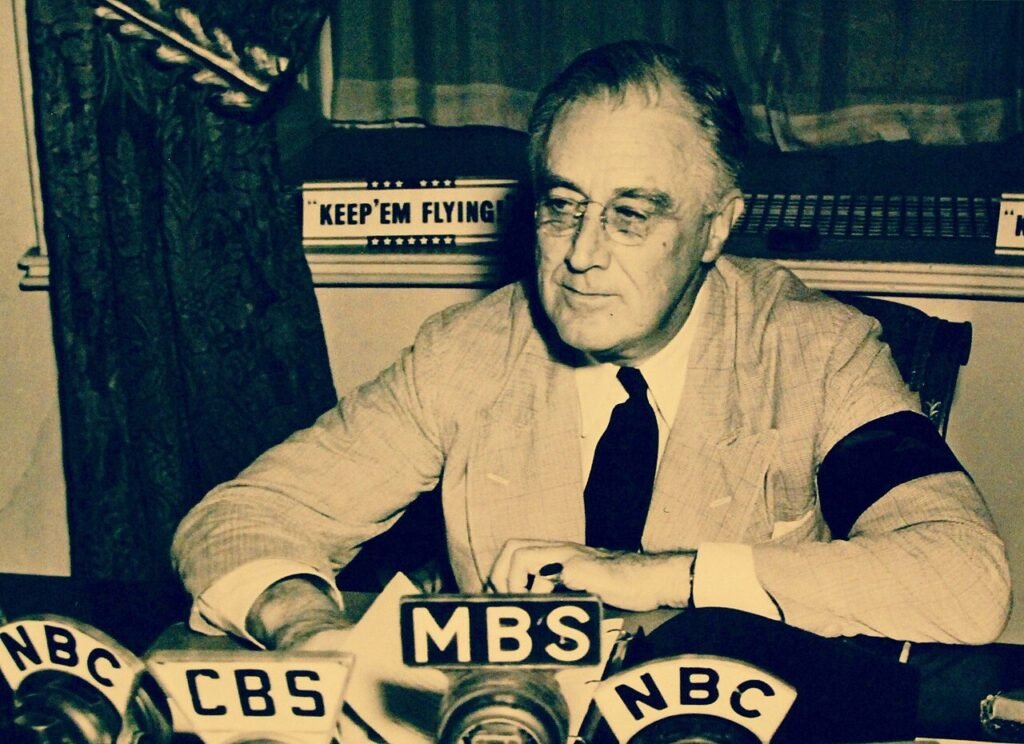
In the East Room of the White House on June 6, 1941, President Franklin D. Roosevelt delivered what newspapers called a “momentous” address that would fundamentally alter America’s stance toward the global conflict raging across Europe and Asia. Six months before Pearl Harbor would force the nation into war, Roosevelt took the unprecedented step of declaring an unlimited national emergency, expanding presidential powers and signaling America’s deepening commitment to the Allied cause.
Presidential Emergency Authority Precedents Today
By June 1941, the world was ablaze with conflict. Nazi Germany had conquered much of Europe, while Britain stood virtually alone against the Axis powers. The United States, officially neutral, had been steadily increasing its support for Britain through programs like Lend-Lease, but Roosevelt faced significant domestic opposition to deeper involvement. Many Americans, weary from the previous world war, remained committed to isolationism and viewed European conflicts as foreign entanglements.
The president had been carefully maneuvering to prepare the nation for what he saw as inevitable American participation in the war. His fireside chats had become a crucial tool for shaping public opinion, allowing him to speak directly to millions of Americans in their homes through radio broadcasts that had become a cherished national ritual.
“declared the existence of an unlimited national emergency
— Carbon County News, June 6, 1941
Arsenal of Democracy Legal Framework Established
Roosevelt’s June 6 address took place in an atmosphere of high drama and ceremony. According to newspaper accounts, his listeners in the White House included “cabinet members diplomats of the Americas and other democracies and their families.” The setting itself conveyed the gravity of the moment—this was not merely another presidential speech, but a historic declaration witnessed by representatives of the free world.
FROM THE ARCHIVE
Like reading history this way?
Get one of these stories delivered every day. Free.
SUBSCRIBE →In his characteristic measured tones, Roosevelt “declared the existence of an unlimited national emergency.” This legal designation granted the president extraordinary powers typically reserved for wartime, including the authority to mobilize resources, regulate commerce, and coordinate the nation’s industrial capacity for defense purposes. The declaration went far beyond the limited national emergency he had proclaimed in September 1939 following Germany’s invasion of Poland.
The speech represented Roosevelt’s most explicit warning yet about the Nazi threat to American security and democratic values. While the full text of his remarks was not reproduced in the Montana newspapers, the very fact that they characterized the address as “momentous” indicates the profound impact his words had on contemporary observers.
Roosevelt Declares Unlimited Emergency Powers June 6
Roosevelt’s declaration marked a critical turning point in America’s path toward war. By invoking unlimited emergency powers, the president positioned the United States as an active participant in the global struggle against fascism, even while maintaining the fiction of neutrality. The declaration provided legal justification for expanded military production, increased aid to Britain, and other measures that would prepare America for active combat.
The timing was no accident. Just weeks before Germany’s invasion of the Soviet Union would reshape the entire conflict, Roosevelt was laying the groundwork for America to assume its role as the “arsenal of democracy.” The emergency declaration would remain in effect throughout the war, providing the legal framework for unprecedented federal coordination of the American economy and society.
Contemporary editorial opinion, as reflected in Montana newspapers, revealed the deep divisions Roosevelt’s policies were creating. Some praised the necessity of national unity in defense preparations, while others criticized what they saw as the president’s “stampede to war” and demanded more transparency about his foreign policy objectives.
Nazi Conquest Sparks American Isolationist Debate
Roosevelt’s 1941 declaration established precedents for presidential emergency powers that remain controversial today. Modern presidents continue to invoke national emergency authorities for purposes ranging from immigration enforcement to pandemic response, often citing legal frameworks that trace back to Roosevelt’s wartime expansion of executive power. The debate over when presidents should declare emergencies and how long such declarations should remain in effect echoes the constitutional questions first raised by Roosevelt’s momentous June 6 address.
Sources
- Carbon County News, June 6, 1941 — Library of Congress
- Browning Chief, June 6, 1941 — Library of Congress