

Bolshevik-German Armistice Signed as Peace Negotiations Begin, December 1917
1917Eastern Front
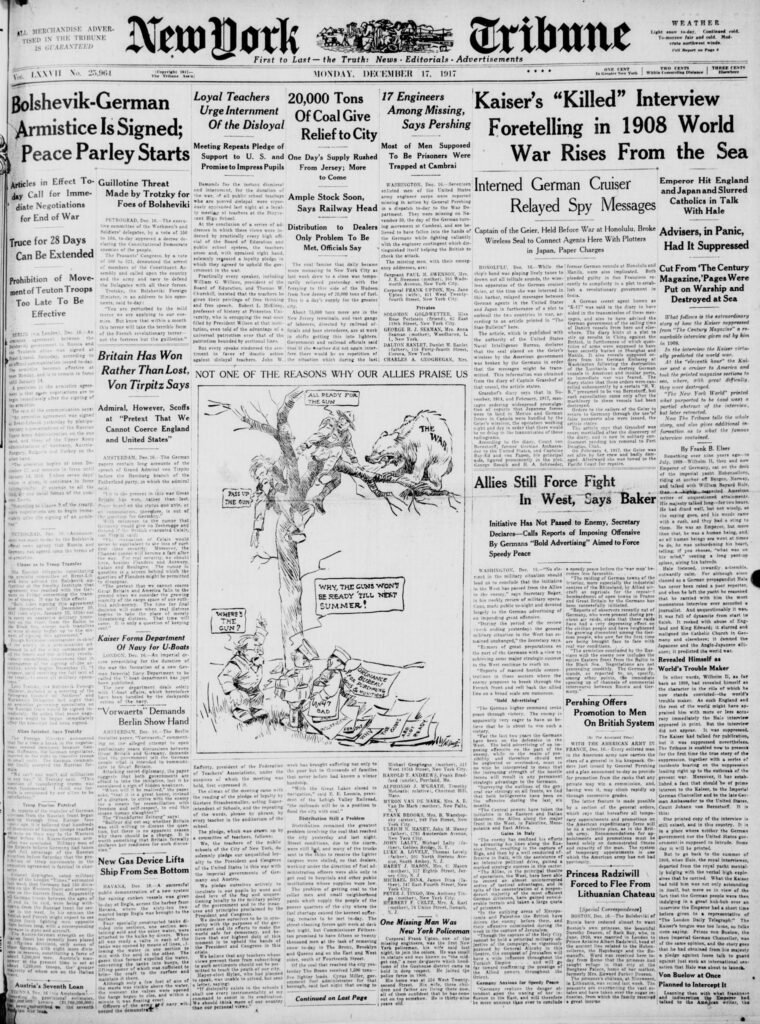
The guns fell silent along hundreds of miles of the Eastern Front on December 16, 1917, as Bolshevik Russia and Germany signed a historic armistice agreement that would fundamentally alter the course of World War I. The accord, which took effect immediately, marked the first major crack in the alliance system that had locked Europe in devastating conflict for over three years.
Brest-Litovsk’s Blueprint for Revolutionary Diplomacy
The Russian Empire had been reeling since the March Revolution that toppled Tsar Nicholas II, and the situation deteriorated further after Vladimir Lenin’s Bolsheviks seized power in the October Revolution. Lenin had promised peace to a war-weary Russian populace, and his government moved swiftly to negotiate with the Central Powers. The Bolsheviks viewed the conflict as an imperialist war that served only the interests of capitalist nations, making a separate peace both ideologically consistent and politically necessary.
The Agreement
According to reports reaching New York, the armistice agreement carried significant terms that demonstrated Germany’s strong negotiating position. The truce was set to last 28 days but could be extended, providing time for comprehensive peace negotiations. Crucially, the agreement included provisions regarding troop movements, though reports suggested these restrictions came “Too Late To Be Effective” for preventing German forces from being transferred to other fronts. The New York Tribune reported that the articles called for “Immediate Negotiations for End of War” between the parties.
FROM THE ARCHIVE
Like reading history this way?
Get one of these stories delivered every day. Free.
SUBSCRIBE →“Call for Immediate Negotiations for End of War
— New-York Tribune, December 17, 1917
The signing represented a diplomatic victory for Germany, which had long sought to knock Russia out of the war to concentrate its forces on the Western Front. For the Bolsheviks, it fulfilled a key revolutionary promise while buying time to consolidate power amid ongoing civil unrest and counter-revolutionary activities.
Immediate Impact
News of the armistice sent shockwaves through Allied capitals, where military planners had been counting on Russian forces to maintain pressure on Germany’s eastern borders. The prospect of German divisions being freed up for deployment against British and French forces in France represented a potentially catastrophic shift in the balance of power. The timing was particularly ominous, as it came just as American troops were beginning to arrive in meaningful numbers on the Western Front.
The armistice also had profound implications for the various nationalist movements within the former Russian Empire. Regions like Ukraine, Finland, and the Baltic states saw an opportunity to assert independence, while the ongoing Russian Civil War complicated any hopes for a swift resolution to the eastern question.
Lenin’s Revolutionary Promise Meets German Opportunity
The Bolshevik-German armistice of December 1917 led directly to the Treaty of Brest-Litovsk in March 1918, which formally ended Russian participation in World War I and established principles of national self-determination that continue to influence international law today. The separate peace also demonstrated how domestic revolution could reshape international conflicts, a pattern that would repeat throughout the 20th century from China to Vietnam to Afghanistan.
Sources
- New-York Tribune, December 17, 1917 — Library of Congress