

Georgia Voters Prepare for Historic 1900 Presidential Election as Communities Rally
1900Brunswick, Georgia
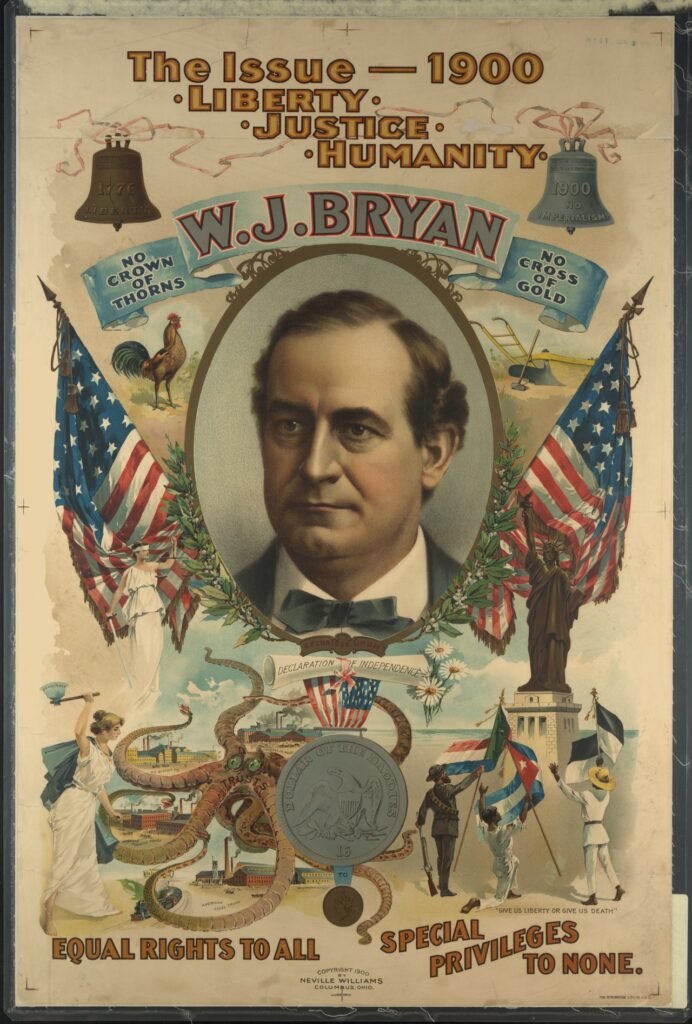
In the final days before one of America’s most consequential presidential elections, communities across Georgia were mobilizing in unprecedented ways to participate in the democratic process. The 1900 contest between William Jennings Bryan and incumbent William McKinley had captured public imagination like few elections before it, prompting towns like Brunswick to organize elaborate public gatherings where citizens could follow the returns together.
Democratic Dominance Shapes Southern Politics
The 1900 presidential election represented a critical juncture in American history, pitting the populist Democrat William Jennings Bryan against Republican President William McKinley. Bryan, making his second run for the presidency after his famous “Cross of Gold” speech in 1896, campaigned on a platform of economic reform and anti-imperialism. The election would ultimately determine America’s direction on issues ranging from monetary policy to overseas expansion following the Spanish-American War.
For communities across the South, this election held particular significance. Georgia, like much of the region, was experiencing rapid social and economic change as the nineteenth century drew to a close. The state’s growing towns and cities were becoming centers of political engagement, with local newspapers serving as vital conduits of information about national affairs.
Telegraph Wires Transform Civic Participation
As election day approached, Brunswick’s civic leaders organized an innovative public event at the local opera house. According to contemporary accounts, “a wire will be run on the stage and returns will be given out promptly and quickly” to accommodate the unprecedented public interest. The organizers expected the venue to be packed, reflecting the intense community engagement with the electoral process.
The Brunswick Times-Call reported that “the coming election is the absorbing interest” and that first returns would begin arriving around 7 p.m. on election night. This public gathering represented a new form of civic participation, where entire communities could experience the democratic process collectively rather than individually.
FROM THE ARCHIVE
Like reading history this way?
Get one of these stories delivered every day. Free.
SUBSCRIBE →The Democratic ticket featured Bryan for President and Adlai E. Stevenson for Vice President, with local Georgia electors including Augustus DuPont from Fulton County and Colville representing the First Congressional District. These local connections helped tie the national contest to immediate community concerns.
Brunswick Opera House Hosts Election Night
These community election gatherings marked a significant evolution in American civic culture. The decision to transform election night into a public event reflected growing democratic participation and the increasing role of technology—telegraph wires—in connecting local communities to national political developments.
The intense public interest described in Georgia newspapers mirrored national trends. Bryan’s campaign had energized voters across the country, particularly in rural and working-class communities that resonated with his populist message. The organized nature of these election watch parties demonstrated how seriously local communities took their role in the democratic process.
For Georgia specifically, this election represented an opportunity to influence national policy at a time when the state was working to define its place in the post-Reconstruction era. The strong Democratic organization evident in the detailed electoral preparations showed the party’s deep roots in Southern communities.
Bryan Versus McKinley Takes Georgia
While McKinley would ultimately win the 1900 election, defeating Bryan by a wider margin than in 1896, the community engagement evident in places like Brunswick established patterns that would shape American electoral culture for generations. The concept of public election viewing parties would evolve over the decades, eventually becoming the television election night gatherings familiar to modern Americans.
The 1900 election also marked the last time that monetary policy—specifically the debate over the gold standard versus silver—would dominate a presidential campaign. Bryan’s defeat effectively ended the populist movement as a major force in national politics, though many of its ideas would later resurface in Progressive Era reforms.
For Georgia and the South, the election reinforced Democratic dominance that would persist well into the twentieth century. The organizational capacity demonstrated in these election gatherings would later serve the region’s political leaders as they navigated the complex challenges of the new century.
Sources
- The Brunswick Times-Call, November 3, 1900 — Library of Congress