

Lyndon Johnson Captures Texas Senate Seat in Historic 1941 Victory
1941Texas
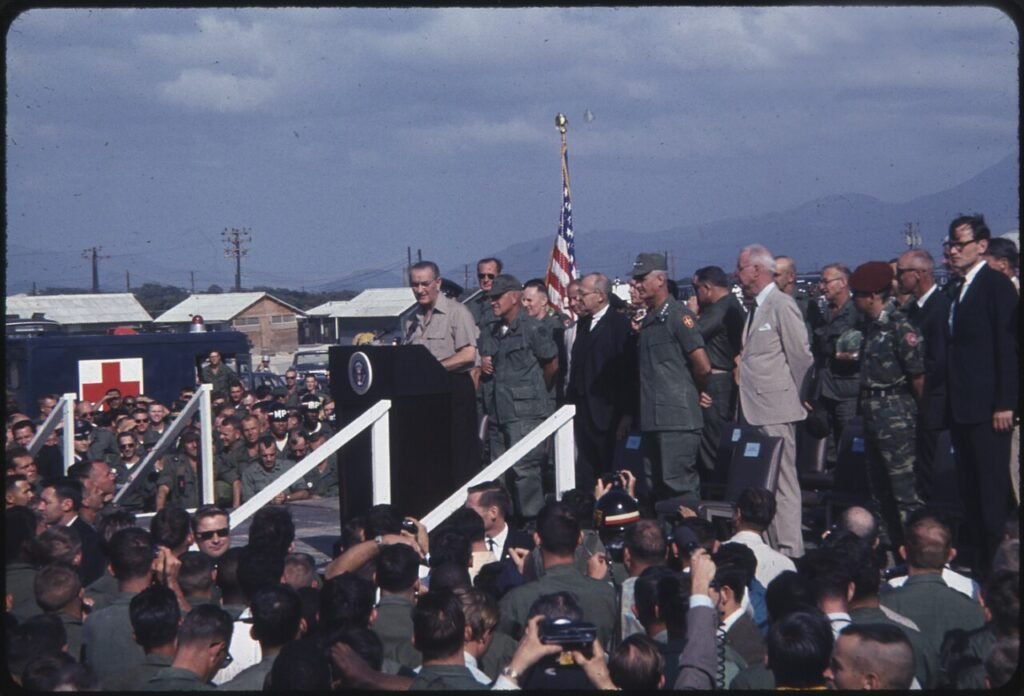
In the sweltering heat of a Texas summer, a young congressman named Lyndon Johnson had just pulled off what many considered impossible. On June 29, 1941, newspapers across the Lone Star State proclaimed his victory in a Senate race that would reshape both Texas politics and American history. Johnson had become “the first man in the state’s history to break Governor W. Lee O’Daniel’s hold on the state’s voters.”
Breaking O’Daniel’s Grip
Governor Wilbert Lee “Pappy” O’Daniel had been a political force in Texas since his surprise gubernatorial victory in 1938. The flour salesman turned radio personality had built his career on folksy charm and hillbilly music, transforming himself from a Fort Worth businessman into the state’s most popular politician. His radio show had made him a household name, and his political machine seemed unbreakable.
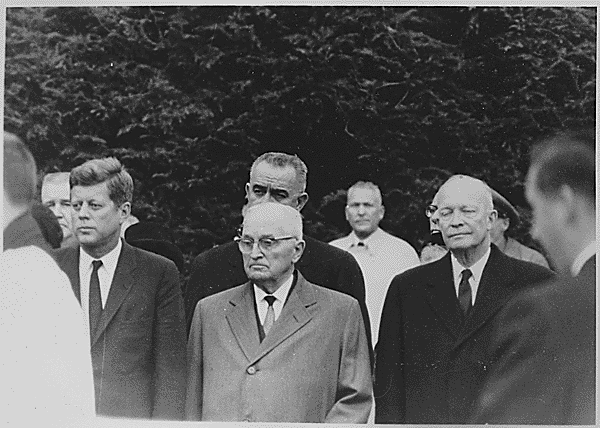
Yet Johnson, at just 32 years old, had managed to crack that foundation. The McAllen Daily Press captured the magnitude of this achievement, noting that “The people of Texas have spoken and Lyndon Johnson is our next United States senator.” The victory represented more than just another election—it was a generational shift in Texas Democratic politics.
“The people of Texas have spoken
— McAllen Daily Press, June 29, 1941
FROM THE ARCHIVE
Like reading history this way?
Get one of these stories delivered every day. Free.
SUBSCRIBE →Roosevelt’s Shadow
The newspaper’s editorial writers recognized that Johnson’s victory might have had assistance from an unlikely source. “Or perhaps it was President Roosevelt, the nation’s unchallenged vote-getter, who broke” O’Daniel’s hold, the McAllen Daily Press speculated. Johnson had positioned himself as a loyal New Deal Democrat, aligning closely with Roosevelt’s policies at a time when the president’s popularity remained strong, even as war clouds gathered across the Atlantic.
This connection to Roosevelt would prove prescient. As Europe burned and America edged closer to war, Johnson’s Senate seat would become a crucial platform for supporting the administration’s military buildup and eventual entry into World War II.
A Political Earthquake
The election results sent shockwaves through Texas political circles. O’Daniel’s apparent invincibility had been shattered by a congressman who had learned his political craft in the rough-and-tumble world of Texas Hill Country politics. Johnson’s victory demonstrated his growing mastery of coalition-building and his ability to appeal to both rural and urban voters.
The win also marked Johnson’s emergence as a figure of national significance. His successful challenge to an established political machine caught the attention of Democratic leaders in Washington, who saw in the young Texan a rising star capable of delivering results in a crucial southern state.
The Senate Stepping Stone
Johnson’s 1941 Senate victory proved to be the foundation for one of the most consequential political careers in American history. The seat he won that summer would serve as his launching pad to the vice presidency in 1960 and ultimately to the Oval Office following John F. Kennedy’s assassination. His mastery of Senate procedures and relationships, developed over nearly two decades in the chamber, would prove essential to passing landmark civil rights legislation and Great Society programs in the 1960s.
Sources
- McAllen Daily Press, June 29, 1941 — Library of Congress