

British Pilot Sets World Speed Record at 606 MPH in Jet Aircraft, December 1945
1945Herne Bay, England
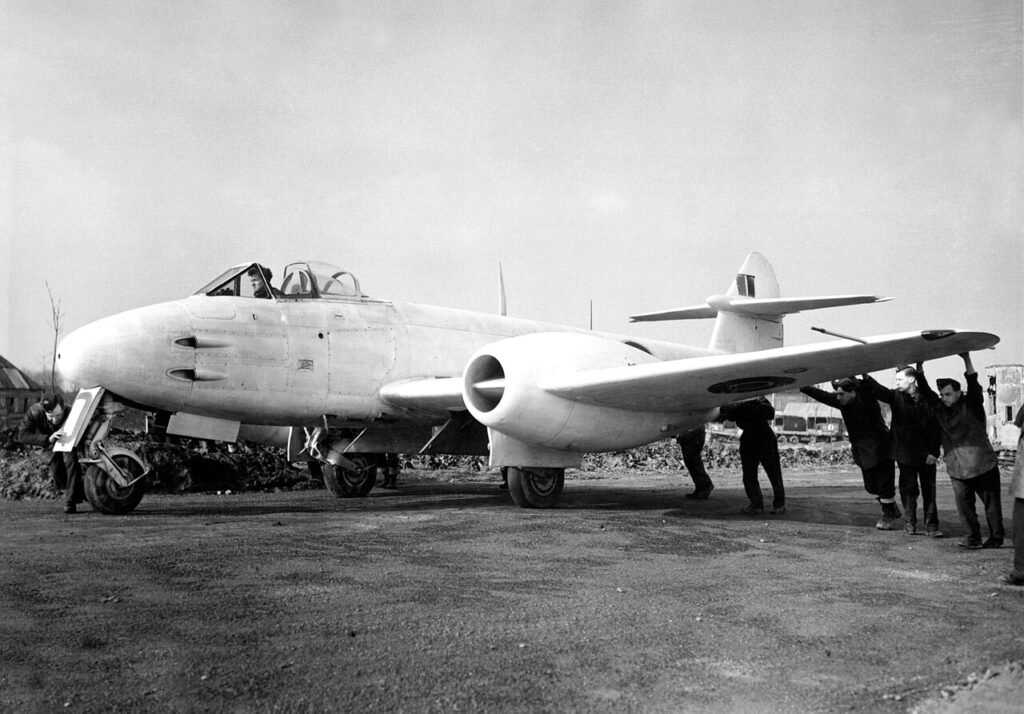
On a windswept airfield at Herne Bay, England, the roar of a revolutionary new engine split the December air as Captain H.J. Wilson climbed into the cockpit of his British Gloster Meteor jet plane, nicknamed Britannia. Moments later, he would shatter every conception of how fast humans could travel through the sky, pushing aviation into an era that would transform warfare, commerce, and exploration forever.
The Dawn of the Jet Age
By December 1945, the world was still adjusting to the end of the most devastating conflict in human history. While Allied forces celebrated victory, military engineers on both sides of the Atlantic were already racing toward the next frontier: jet propulsion. The Germans had pioneered operational jet fighters during the war’s final months, but British engineers at Gloster Aircraft Company had been quietly developing their own revolutionary aircraft.
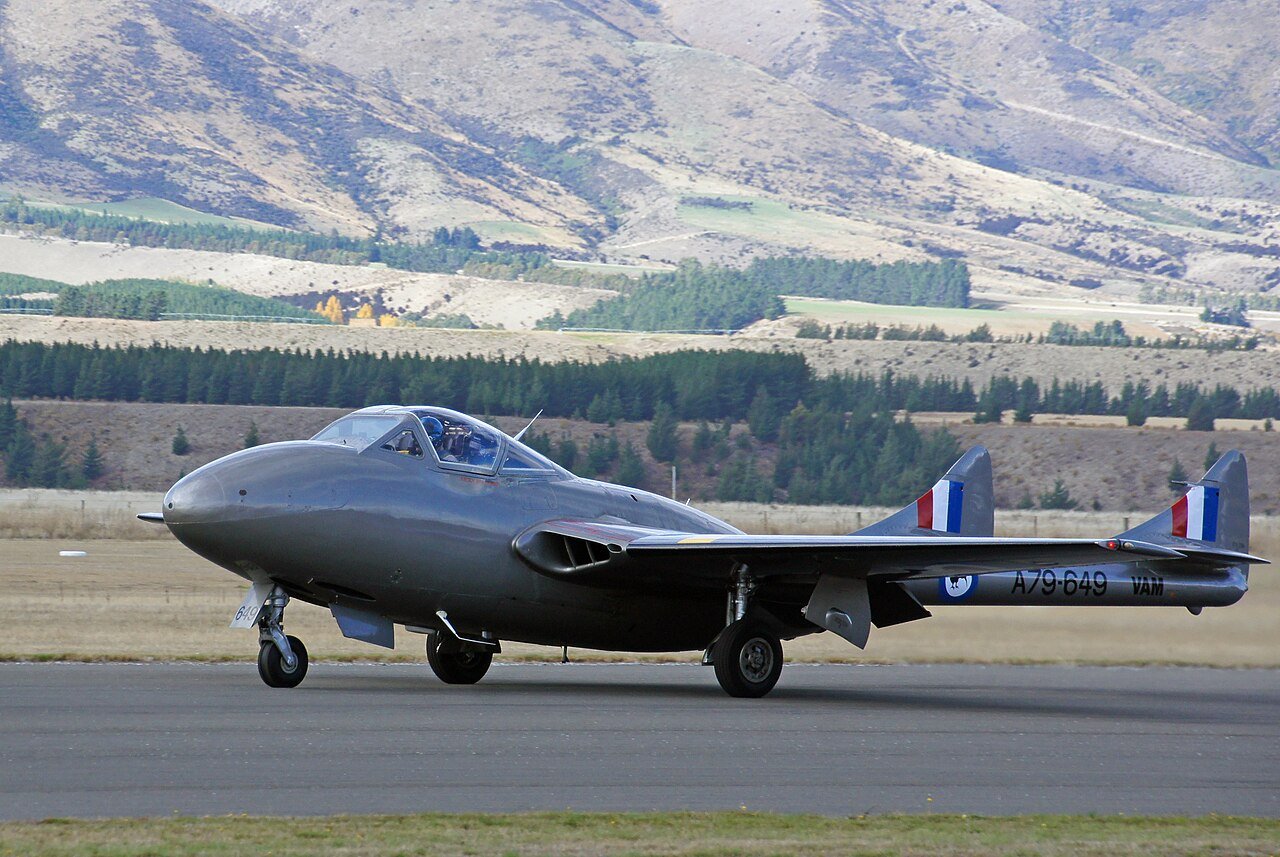
The Gloster Meteor represented Britain’s answer to the jet age. Unlike the propeller-driven aircraft that had dominated aviation for four decades, the Meteor’s twin jet engines could push the aircraft to speeds previously thought impossible. Test pilots had been gradually increasing velocities throughout 1945, but no one had yet broken the 600 mph barrier.
“606 miles an hour
— The Seward Polaris, December 5, 1945
FROM THE ARCHIVE
Like reading history this way?
Get one of these stories delivered every day. Free.
SUBSCRIBE →A Record-Breaking Day
December 5, 1945, would prove to be a day of fierce competition between British pilots. Eric Greenwood had already established a new world record of 603 mph earlier that day, but Wilson was determined to push even further. As contemporary reports noted, Wilson achieved “606 miles an hour” in his specially prepared Meteor, officially verified through four separate runs over the measured course.
The significance of those four runs cannot be overstated. Aviation authorities required multiple passes to ensure accuracy and account for wind conditions. Each run had to be precisely timed and measured, with observers positioned at both ends of the course. Wilson’s achievement was no fluke—it was a methodical demonstration of the Meteor’s capabilities and his own skill as a test pilot.
Breaking the Sound Barrier’s Precursor
Wilson’s 606 mph represented more than just a new number in the record books. At that speed, he was approaching 80% of the speed of sound at sea level, entering the realm of compressibility effects that would challenge aviation engineers for years to come. The achievement demonstrated that jet propulsion had fundamentally altered the physics of flight, opening possibilities that propeller aircraft could never reach.
The twin-engine Meteor design proved crucial to this success. Unlike single-engine jets, the twin configuration provided redundancy and more balanced thrust, allowing for the sustained high-speed runs necessary to establish official records. This achievement would influence jet fighter design for decades, establishing the template for numerous military aircraft throughout the Cold War.
Why It Still Matters
Wilson’s 606 mph record directly paved the way for Chuck Yeager’s supersonic flight just two years later and ultimately enabled the development of modern commercial aviation. Today’s passenger jets routinely cruise at speeds that would have been inconceivable before Wilson’s pioneering flight, while military aircraft trace their lineage directly back to the Gloster Meteor’s revolutionary design principles.
Sources
- The Seward Polaris, December 5, 1945 — Library of Congress