

Norfolk Naval Air Station Explosion Injures Hundreds in September 1943
1943Norfolk, Virginia
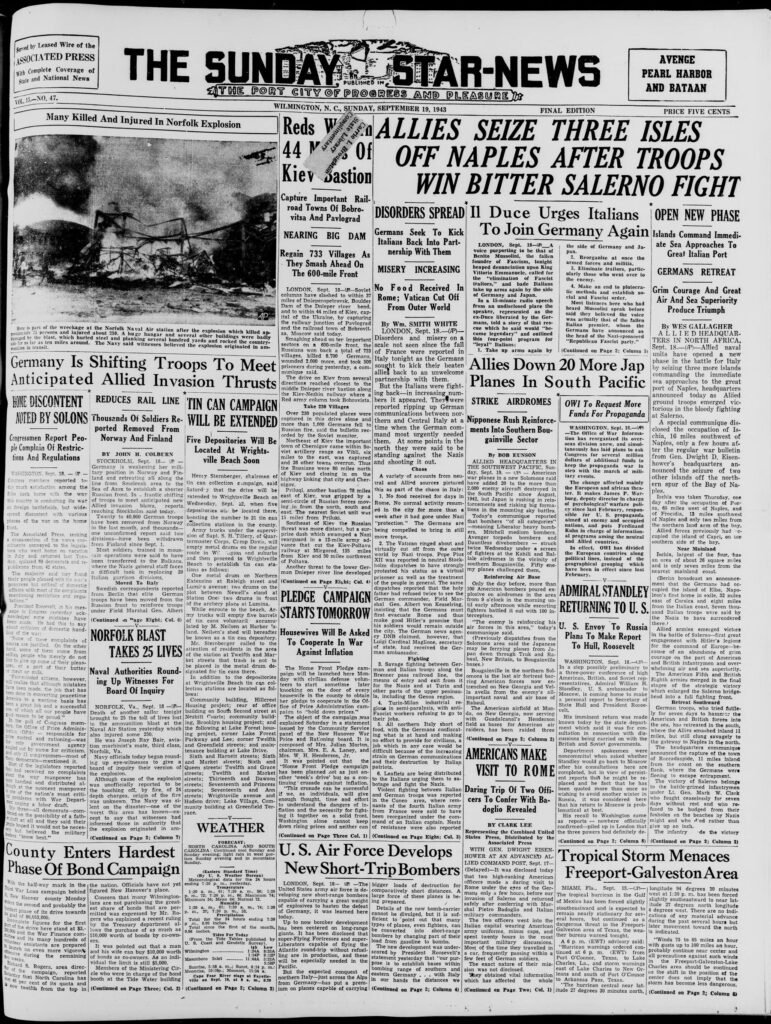
The twisted metal and scattered debris told a story of sudden violence at one of America’s most important wartime aviation facilities. On September 19, 1943, newspapers across the country carried photographs and reports of a devastating explosion that had rocked Norfolk Naval Air Station, leaving hundreds injured in what would become one of the most serious aviation disasters on the American home front during World War II.
Modern Naval Safety Protocols Born
Norfolk Naval Air Station, established in 1918, had grown into a crucial hub for naval aviation training and operations by 1943. As America’s involvement in World War II intensified, the facility expanded rapidly to meet the demands of training pilots and maintaining aircraft for both the Atlantic and Pacific theaters. The base housed thousands of personnel, from raw recruits learning to fly to seasoned mechanics keeping the Navy’s growing fleet of aircraft operational.
The autumn of 1943 marked a particularly intense period for naval aviation. With Allied forces pressing advances in Italy and preparing for future operations, the demand for trained aviators had never been higher. Norfolk, like other major naval air stations, operated around the clock, with hangars, fuel depots, and ammunition storage areas working at maximum capacity to support the war effort.
“Here is part of the wreckage at the Norfolk Naval Air station
— The Wilmington Morning Star, September 19, 1943
Hundreds Injured At Peak Operations
The explosion that shattered the morning calm at Norfolk Naval Air Station sent shockwaves through the military aviation community. Contemporary newspaper coverage captured the immediate aftermath, with The Wilmington Morning Star reporting on September 19, 1943: “Here is part of the wreckage at the Norfolk Naval Air station.” The accompanying photograph showed the extensive destruction that had befallen one of the Navy’s premier training facilities.
FROM THE ARCHIVE
Like reading history this way?
Get one of these stories delivered every day. Free.
SUBSCRIBE →
While wartime censorship limited the specific details newspapers could report about the incident, the scale of the disaster was unmistakable. Hundreds of personnel required medical attention, overwhelming local military medical facilities and necessitating the transfer of many injured to civilian hospitals in the Norfolk area. The explosion occurred during a period of peak activity at the base, when hangars were filled with aircraft and personnel were engaged in routine training and maintenance operations.
The disaster struck at the heart of America’s naval aviation machine, damaging critical infrastructure and temporarily disrupting training operations at a time when every qualified pilot was desperately needed for combat operations overseas. Emergency response teams worked through the day to search for survivors and assess the full extent of the damage to the facility’s operational capacity.
September 19 Morning Blast
The Norfolk Naval Air Station explosion highlighted the inherent dangers facing military aviation facilities during wartime, even those located safely within American borders. The incident demonstrated how the pressures of accelerated wartime operations—with their emphasis on speed and maximum utilization of resources—could create conditions conducive to catastrophic accidents.
For naval aviation, the disaster served as a stark reminder that the war’s casualties extended beyond combat zones. The hundreds of injured at Norfolk represented a significant loss of trained personnel at a critical juncture in the war, when the Navy was simultaneously expanding its Pacific operations and supporting Allied advances in Europe.
The explosion also underscored the vulnerability of America’s aviation infrastructure during World War II. While enemy sabotage was initially suspected in many such incidents, most proved to be tragic accidents resulting from the dangerous combination of high-octane aviation fuel, munitions, and the intense operational tempo demanded by wartime conditions.
Norfolk Naval Training Hub Expands
Norfolk Naval Air Station, now Naval Station Norfolk, remains the world’s largest naval base and continues to serve as a crucial hub for naval aviation. The safety protocols and emergency response procedures developed in the wake of disasters like the 1943 explosion helped establish the comprehensive safety standards that govern modern military aviation operations, protecting thousands of service members who work with dangerous materials and equipment daily.
Sources
- The Wilmington Morning Star, September 19, 1943 — Library of Congress