

Atlantic Cable Project Faces Setback as Great Eastern Struggles with Broken Telegraph Wire, 1865
1865North Atlantic Ocean
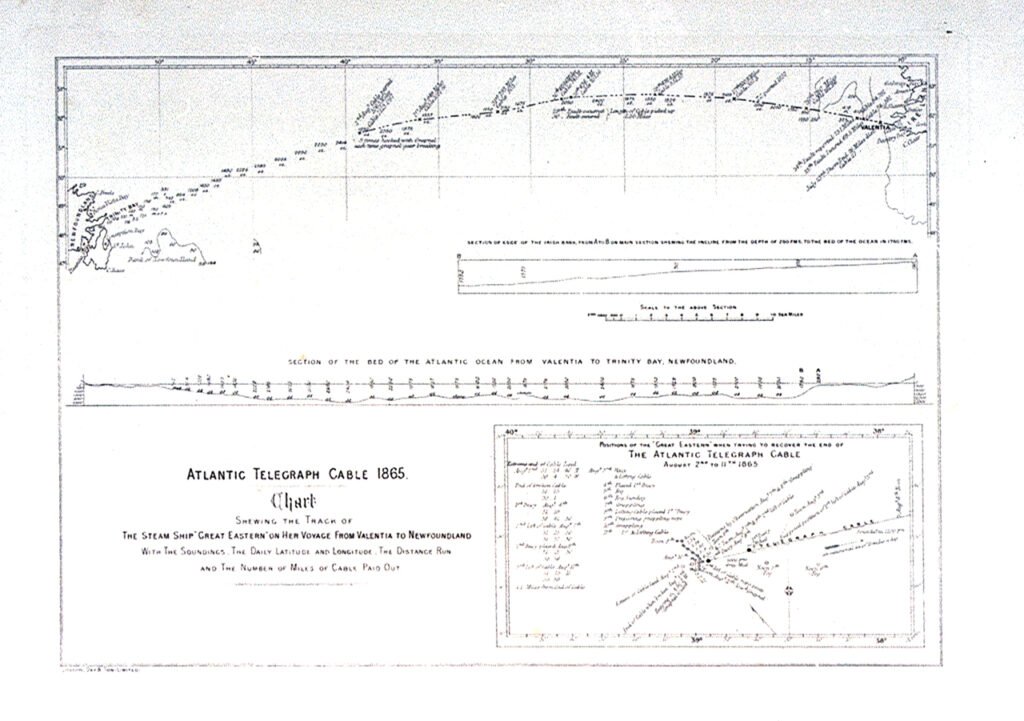
In the vast expanse of the North Atlantic, the world’s largest steamship was engaged in what one newspaper called “the melancholy task of fishing up the wire.” The Great Eastern, a mechanical marvel nearly seven hundred feet long, had become the unlikely star of humanity’s most ambitious communication project—and by late August 1865, it was struggling against the ocean’s depths to salvage what could be the future of global connectivity.
The Grand Vision
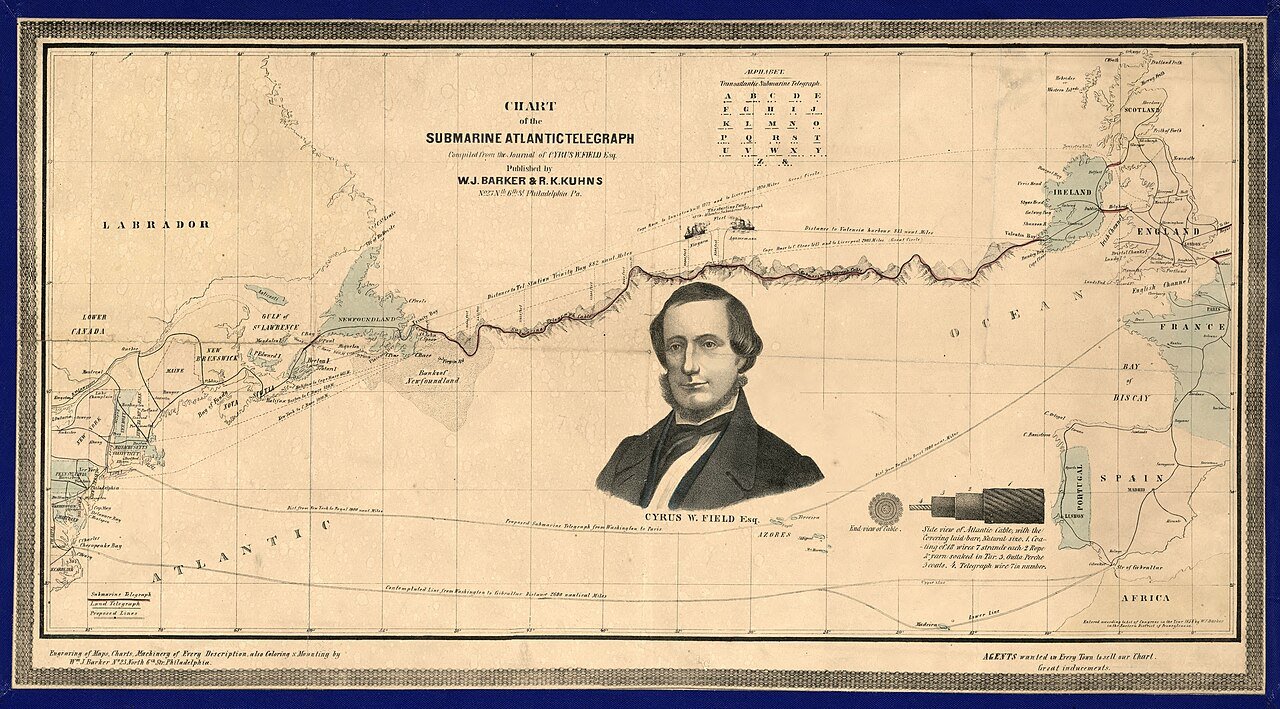
The Atlantic telegraph cable represented the boldest engineering venture of the 19th century. Stretching across 2,000 miles of ocean floor between Ireland and Newfoundland, the underwater wire promised to shrink the world by delivering messages across the Atlantic in minutes rather than weeks. Previous attempts in 1857 and 1858 had ended in failure, with cables breaking or signals fading into silence. The project had consumed fortunes and reputations, but by 1865, investors were ready to try again with improved technology and the massive Great Eastern as their cable-laying vessel.
The Crisis Unfolds
As the New-York Daily Tribune reported on August 24, 1865, anxious observers on both sides of the Atlantic were growing concerned about the prolonged silence from the cable-laying expedition. The Great Eastern had departed from Valentia, Ireland, weeks earlier, but “friends of those on board are not unnaturally uneasy at the absence of any intelligence from her.” The newspaper noted that the massive ship “could scarcely make way” on its voyage from the Nore to Valentia, hinting at the technical challenges that had plagued the mission from the start. What the public didn’t yet fully grasp was that the cable had snapped during laying operations, leaving nearly 1,200 miles of expensive wire on the ocean floor and “the Great Eastern is occupied in the melancholy task of fishing up the wire till the flaw be ascertained and repaired.”
FROM THE ARCHIVE
Like reading history this way?
Get one of these stories delivered every day. Free.
SUBSCRIBE →“the Great Eastern is occupied in the melancholy task of fishing up the wire
— New-York Daily Tribune, August 24, 1865
Against All Odds
The Great Eastern’s crew faced a nearly impossible task. Using primitive grappling hooks and steam-powered winches, they attempted to locate and retrieve the broken cable from depths exceeding two miles. The ship’s chief engineer, Samuel Canning, had designed specialized equipment for the recovery attempt, but the ocean proved a merciless adversary. Day after day, the crew lowered their grappling gear into the abyss, sometimes catching the cable only to have it slip away again. The psychological toll was immense—fortunes hung in the balance, and the credibility of the entire transatlantic telegraph enterprise was at stake.
The Broader Impact
Though this 1865 attempt would ultimately fail to establish a working connection, it provided crucial lessons for the successful 1866 cable that would finally link the continents permanently. The technical innovations developed during the Great Eastern’s struggle—improved cable design, better laying techniques, and more sophisticated recovery equipment—would prove essential to future success. More importantly, the project demonstrated that private enterprise could tackle engineering challenges of unprecedented scale, setting a precedent for future infrastructure megaprojects that would span continents and oceans.
Why It Still Matters
The Atlantic cable project pioneered the technology and business models that evolved into today’s global internet infrastructure. Modern undersea fiber optic cables, carrying over 95% of international internet traffic, follow routes and use techniques first developed by the Great Eastern’s crew. The project’s financing structure also established patterns for funding massive international infrastructure projects that continue to shape how we build global connectivity today.
Sources
- New-York Daily Tribune, August 24, 1865 — Library of Congress