

Great Flood of 1913 Devastates Ohio and Indiana Cities
1913Dayton, Ohio
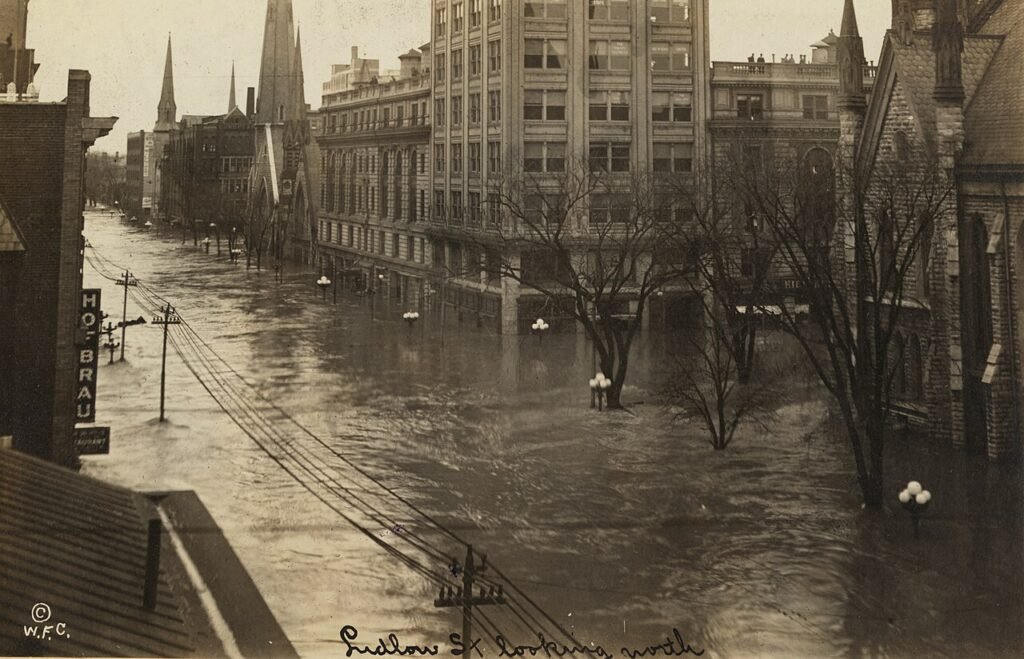
As bright sunshine finally broke through the clouds over Ohio and Indiana on March 28, 1913, it illuminated a landscape transformed by one of the most devastating floods in American history. The floodwaters that had terrorized the region for days were beginning to recede, revealing the staggering scope of destruction left in their wake.
Miami Conservancy District Still Protects Ohio Communities
The Great Flood of 1913 was the culmination of an unprecedented weather pattern that struck the Midwest in late March. Heavy rains and rapidly melting snow had swollen rivers throughout Ohio and Indiana beyond their capacity, overwhelming levees and flood control systems that had never faced such a test. The Miami River valley, home to Dayton and other industrial cities, became ground zero for the catastrophe.
Catastrophe Exposes Failed 19th Century Flood Systems
By March 28, the full extent of the disaster was becoming clear, though reports from the early days had painted an even grimmer picture than reality. According to the Evening Star, “thousands are yet homeless enduring severest hardships” across the flood zone, but revised estimates suggested the initial death toll projections had been exaggerated. In Dayton, the hardest-hit city, motorboat rescue teams exploring the flooded sections found that “the dead in the entire city may not number more than 200,” significantly lower than the catastrophic figures first reported.
“thousands are yet homeless enduring severest hardships
— Evening Star, March 28, 1913
FROM THE ARCHIVE
Like reading history this way?
Get one of these stories delivered every day. Free.
SUBSCRIBE →The flooding extended far beyond Ohio’s borders. In New York State, the Mohawk and Hudson valleys faced their own crisis as the Hudson River shattered the high-water mark set in 1857. Albany found its lower sections underwater, forcing hundreds of families from their homes as business districts shuttered and transportation systems ground to a halt.
Rescue efforts intensified as the waters began to fall. In Dayton, the gradual emergence of previously submerged areas allowed rescue teams to expand their operations, though significant portions of the city remained inaccessible. The return of sunshine provided both practical assistance for rescue operations and a psychological boost for survivors who had endured days of chaos and uncertainty.
Dayton Death Toll Reaches 200 as Waters Recede
The Great Flood of 1913 marked a turning point in American flood control policy and urban planning. The catastrophic failure of existing flood management systems demonstrated the inadequacy of 19th-century approaches to water management in an era of rapid industrialization and urban growth. The disaster prompted a fundamental rethinking of how communities along major waterways should prepare for and respond to natural disasters.
The flood also highlighted the importance of accurate disaster reporting and communication. Early estimates of casualties and damage, spread rapidly through newspaper networks, created widespread panic and complicated relief efforts. The experience underscored the need for more systematic disaster assessment and public information protocols.
Miami River Valley Overwhelmed by March Rains
The Great Flood of 1913 directly led to the creation of the Miami Conservancy District in 1914, one of America’s first comprehensive watershed management authorities. This pioneering flood control system, still operational today, became a model for modern flood management across the United States. The engineering solutions developed in response to the 1913 disaster continue to protect Dayton and surrounding communities, demonstrating how catastrophic events can drive lasting infrastructure innovations that benefit future generations.
Sources
- Evening Star, March 28, 1913 — Library of Congress