Darrow Claims Frame-Up in Leopold and Loeb Murder Case, 1924
1924Chicago, Illinois
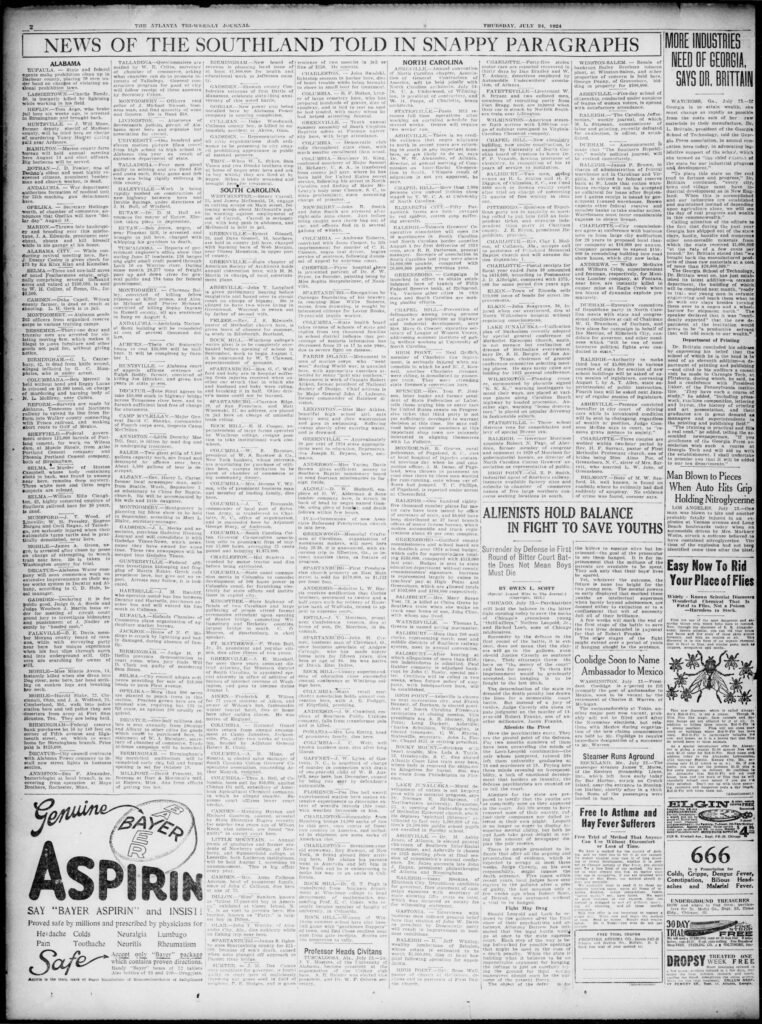
On a sweltering July day in Chicago, the nation’s most famous defense attorney stood before reporters and made a startling accusation. Clarence Darrow, representing two wealthy young men charged with one of the most shocking crimes in American history, declared that his clients were victims of a conspiracy. The Alaska Daily Empire reported the explosive claim with a bold headline: “frameup claimed by Darrow in millionaire murder case.”
Juvenile Death Penalty Precedent Lives On
The case had begun two months earlier with the brutal murder of fourteen-year-old Bobby Franks, whose battered body was found in a culvert south of Chicago. The crime sent shockwaves through the affluent South Side, where such violence seemed impossible. Within days, police arrested Nathan Leopold Jr., 19, and Richard Loeb, 18—both brilliant students from prominent Chicago families who had confessed to killing the boy as an intellectual exercise in committing the “perfect crime.”
Darrow, already legendary for his courtroom theatrics and opposition to capital punishment, had taken the case despite public outrage. The attorney faced the seemingly impossible task of saving two confessed killers from the electric chair, while prosecutors painted them as cold-blooded monsters who deserved to die.
“frameup claimed by Darrow in millionaire murder case
— The Alaska Daily Empire, July 26, 1924
Darrow’s Desperate Conspiracy Gambit
By July 26, 1924, the case had taken an ominous turn for the defense. Authorities were aggressively investigating Leopold and Loeb’s connection to other violent crimes in the Chicago area. The Kusko Times reported that following “positive identification of Leopold and Loeb” in another kidnapping case involving Charles Ream, “authorities today made considerable headway in linking up the murderers of young Franks” with additional crimes.
FROM THE ARCHIVE
Like reading history this way?
Get one of these stories delivered every day. Free.
SUBSCRIBE →The investigation had expanded to include the slaying of Freeman Louis Tracey, described as “a law student at the University of Chicago, a classmate of both the slayers,” and the mysterious murder of Melvin L. Wolf, who had “dropped completely out of sight” after leaving his wealthy grandfather’s home to mail a letter. The Tracey case particularly concerned prosecutors, as it appeared to involve “attempted gland robbery” before the victim “resisted so strenuously that the kidnappers killed him.”
Faced with mounting evidence linking his clients to a potential crime spree, Darrow launched his counterattack. His claim of a frame-up suggested that authorities were manufacturing evidence or coercing witnesses to build a stronger case against Leopold and Loeb. The accusation reflected Darrow’s strategy of portraying his clients not as master criminals, but as troubled young men being scapegoated by an overzealous prosecution.
Leopold and Loeb Linked to Crime Spree
Darrow’s frame-up allegation represented a crucial moment in what had already become the “Trial of the Century.” The case had captivated the nation not only because of the defendants’ wealth and education, but because it challenged fundamental assumptions about crime and punishment in America. Two young men from the best families, with every advantage society could offer, had committed an act of incomprehensible evil.
The expanded investigation threatened to transform Leopold and Loeb from isolated killers into serial predators, making Darrow’s task exponentially more difficult. His conspiracy claim was both a legal necessity and a desperate gambit to shift public attention from his clients’ guilt to alleged prosecutorial misconduct.
The case had already raised profound questions about juvenile justice, mental health, and the death penalty. Darrow’s defense strategy focused not on proving innocence—impossible given the confessions—but on demonstrating that his clients’ youth and psychological disorders made them unsuitable candidates for execution.
Bobby Franks Murder Shocks Chicago
The Leopold and Loeb case established precedents for juvenile criminal defense that continue to influence American jurisprudence today. Darrow’s pioneering use of psychiatric testimony and his arguments about adolescent brain development presaged modern Supreme Court decisions limiting capital punishment for juveniles. The case also demonstrated how media coverage can shape public opinion in high-profile trials, a dynamic that remains central to celebrity criminal cases in the social media age.
Sources
- The Alaska Daily Empire, July 26, 1924 — Library of Congress
- The Kusko Times, July 26, 1924 — Library of Congress